2 November
Best CRM for fast-growing GTM teams
Ready
Choose content from measured buyer prompts, competitor movement, citation patterns, search demand, and website gaps. Plan, draft, review, schedule, and publish through one controlled workflow.
Content Calendar
The publishing plan built from your highest-value visibility gaps.
November 2026
2 November
Ready
4 November
Scheduled
6 November
Scheduled
November 2026
Best CRM for fast-growing GTM teams
Ready
Attio vs HubSpot for flexible sales teams
Scheduled
CRM migration checklist for growing teams
Scheduled
CRM software for product-led sales teams
Scheduled
Refresh Attio integrations for CRM comparison searches
Existing page update
How to build a flexible CRM data model
Scheduled
Sales automation workflows that scale
Scheduled
Best collaborative CRMs for revenue teams
Ready
The best HubSpot alternatives for startups
Scheduled
CRM onboarding benchmarks for GTM teams
Scheduled
How to structure CRM data around your process
Scheduled
CRM migration guide for scaling revenue teams
Scheduled
Choosing a CRM for a modern GTM motion
Scheduled
The 2027 CRM planning guide for sales leaders
Scheduled
Visibility-led content planning uses observed prompt, competitor, source, demand, and website gaps to decide what to create or update. It differs from a generic AI writer because topic selection and later measurement remain tied to evidence from the market.
From gap to page
Every screenshot represents a stage in the same controlled publishing loop.
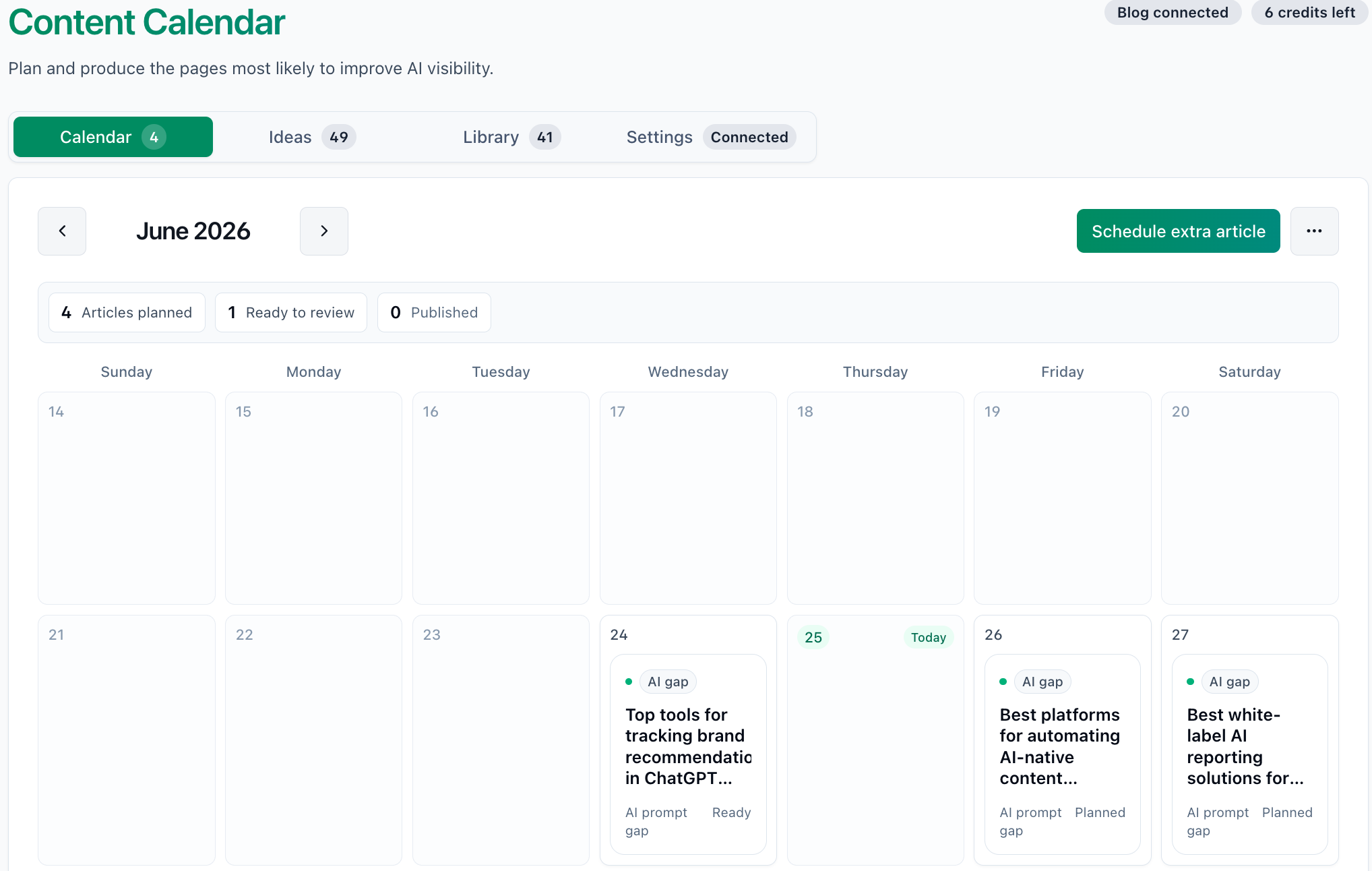
What you are seeing
Build a calendar from buyer questions and identified gaps. See planned, ready-to-review, and published work without separating strategy from production.
Open full-size product screenshot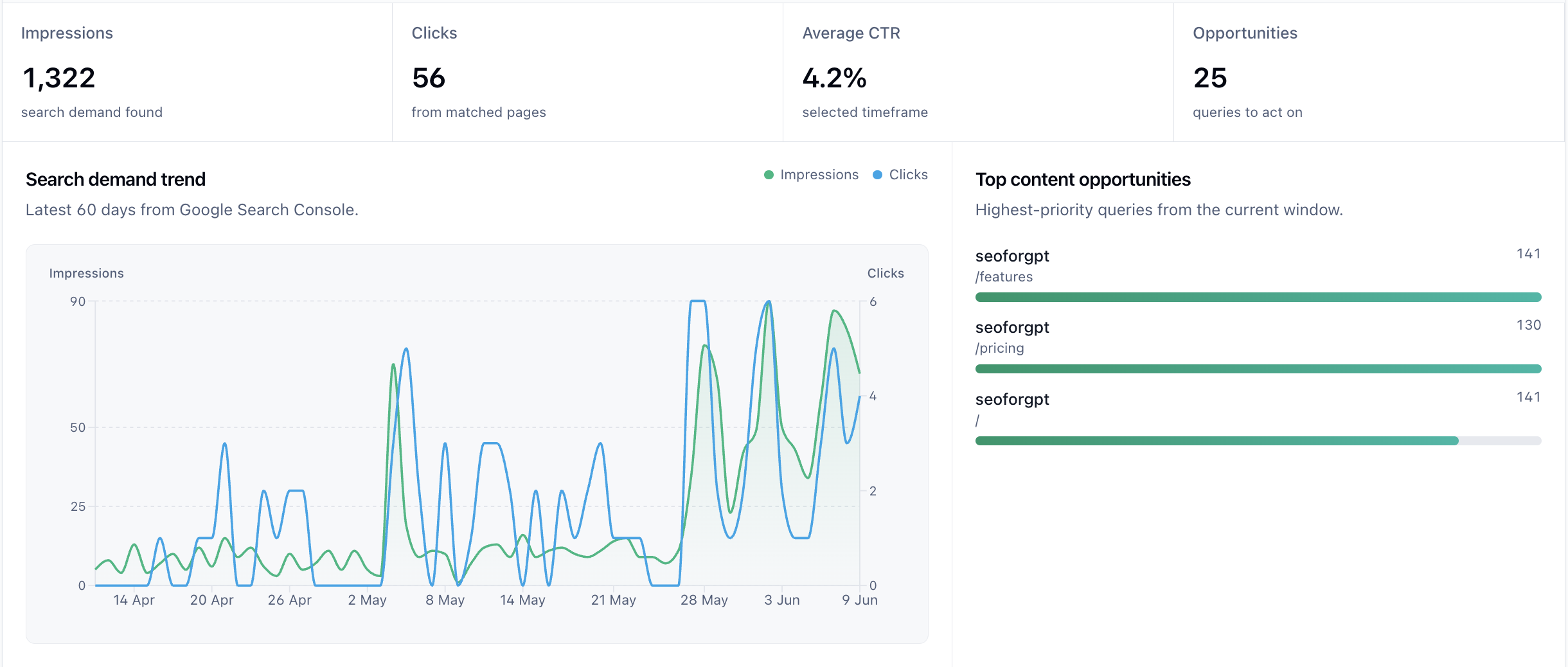
What you are seeing
Use rising questions and topic opportunities to complement visibility data before committing resources to a page.
Open full-size product screenshot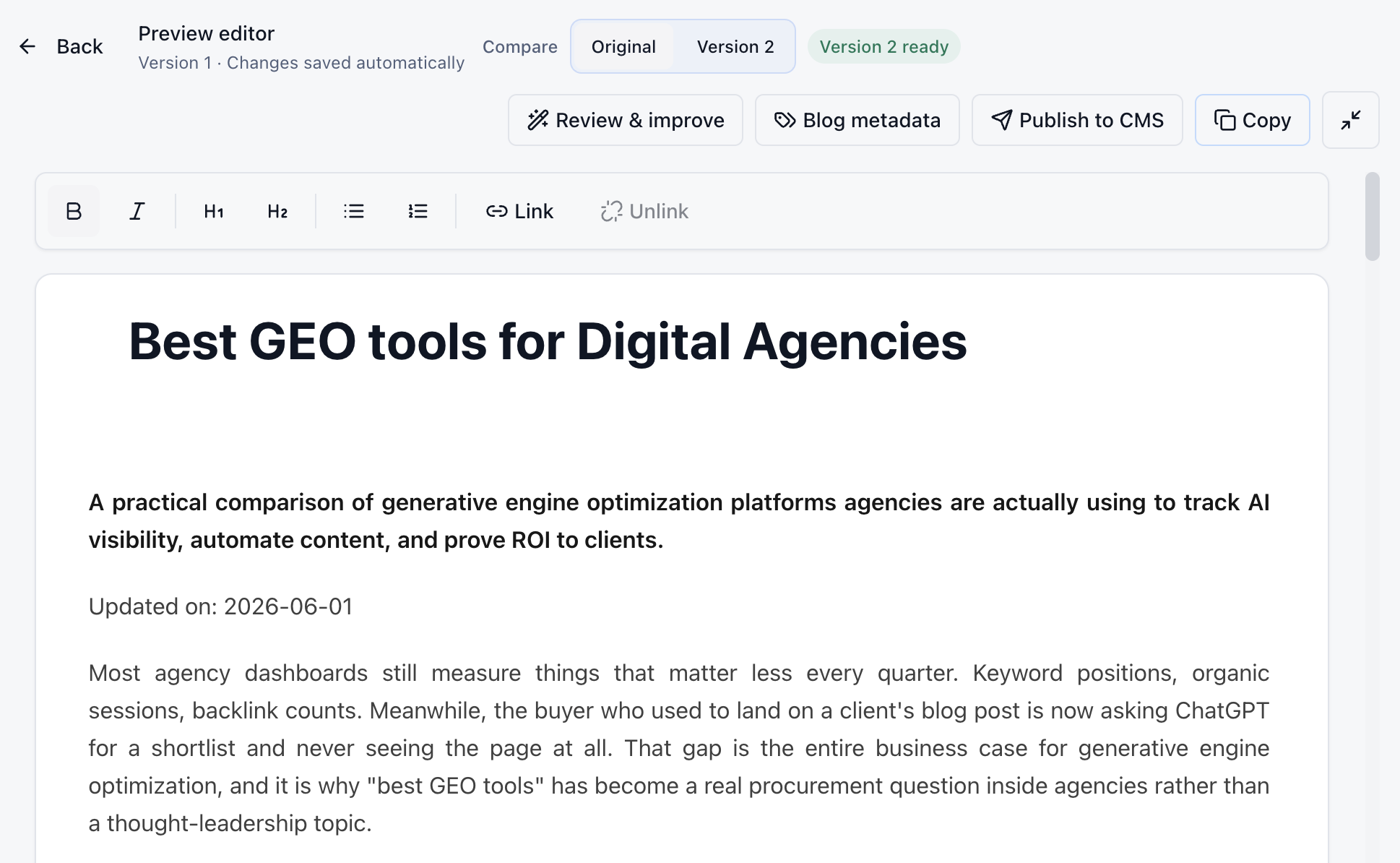
What you are seeing
Edit the article, compare versions, check metadata, preview the result, and select a connected CMS destination before publishing.
Open full-size product screenshot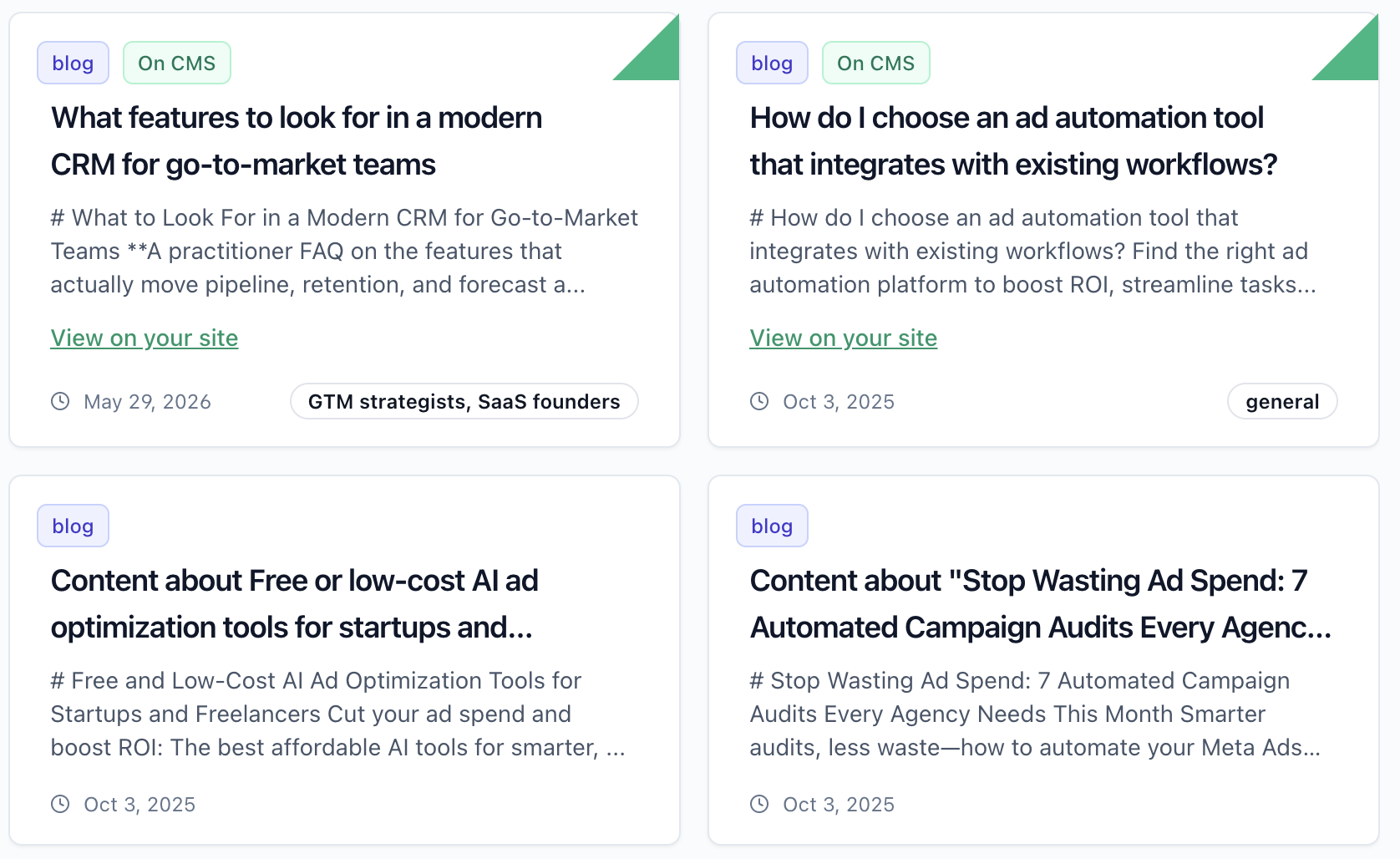
What you are seeing
Review content status and connected publishing destinations so completed work can return to the original monitoring plan.
Open full-size product screenshotHow it works
Publishing is an action the team can control. The later AI response is an outcome to measure, not promise.
Use prompt, competitor, citation, demand, or website evidence to define the content opportunity.
Choose the page, commercial category, and editorial date instead of generating everything at once.
Prepare direct answers, supportable claims, useful comparisons, sources, brand context, and metadata.
Edit, approve, and send supported blog content to the connected CMS workflow.
Run the original prompts again later and record what changed without attributing causation automatically.
Editorial controls
The workflow keeps topic selection, factual review, publishing state, and measurement visible to the team.
Connect the reason for each deliverable to the client gap, approval state, CMS destination, and next reporting cycle.
Give SEO, product marketing, editors, and publishers a shared calendar based on observed market demand.
Run a free audit, identify the prompts your brand is missing, and build a content plan from the evidence.
We use cookies to enhance your experience, analyse site traffic and measure advertising. Read our Cookie Policy