Monitor the buyer questions that shape recommendation shortlists across ChatGPT, Claude, Perplexity, and Gemini. See the answer, rank, competitors, and cited evidence behind every result.
Best CRM platforms for SaaS startups needing fast onboarding
100%
1st
Cited
Jun 16
Best CRM for fast-growing GTM teams
0%
N/A
N/A
Jun 16
CRM with the most flexible data model
100%
2nd
Cited
Jun 16
Top-rated CRM for product-led sales teams
0%
N/A
N/A
Jun 16
Best customizable CRM for startups with unique sales processes
100%
3rd
N/A
Jun 16
How to choose · 3 prompts
How to choose a CRM for a modern sales team
100%
4th
Cited
Jun 16
What should I look for in a collaborative CRM?
0%
N/A
N/A
Jun 16
How to compare CRM platforms for a scaling startup
100%
5th
N/A
Jun 16
What is AI visibility tracking?
AI visibility tracking repeatedly tests a defined set of buyer prompts across AI answer engines and records whether a brand appears. Unlike referral analytics or traditional keyword tracking, it measures presence inside generated answers and keeps the underlying answer available for review.
Prompt-level proof
One score should never hide the evidence.
Move from the portfolio view to the exact question, model response, ranking evidence, competitors, and citations.
Demo workspace: prompt-level monitoring across four AI answer engines.
What you are seeing
Track buyer prompts, not a generic keyword list
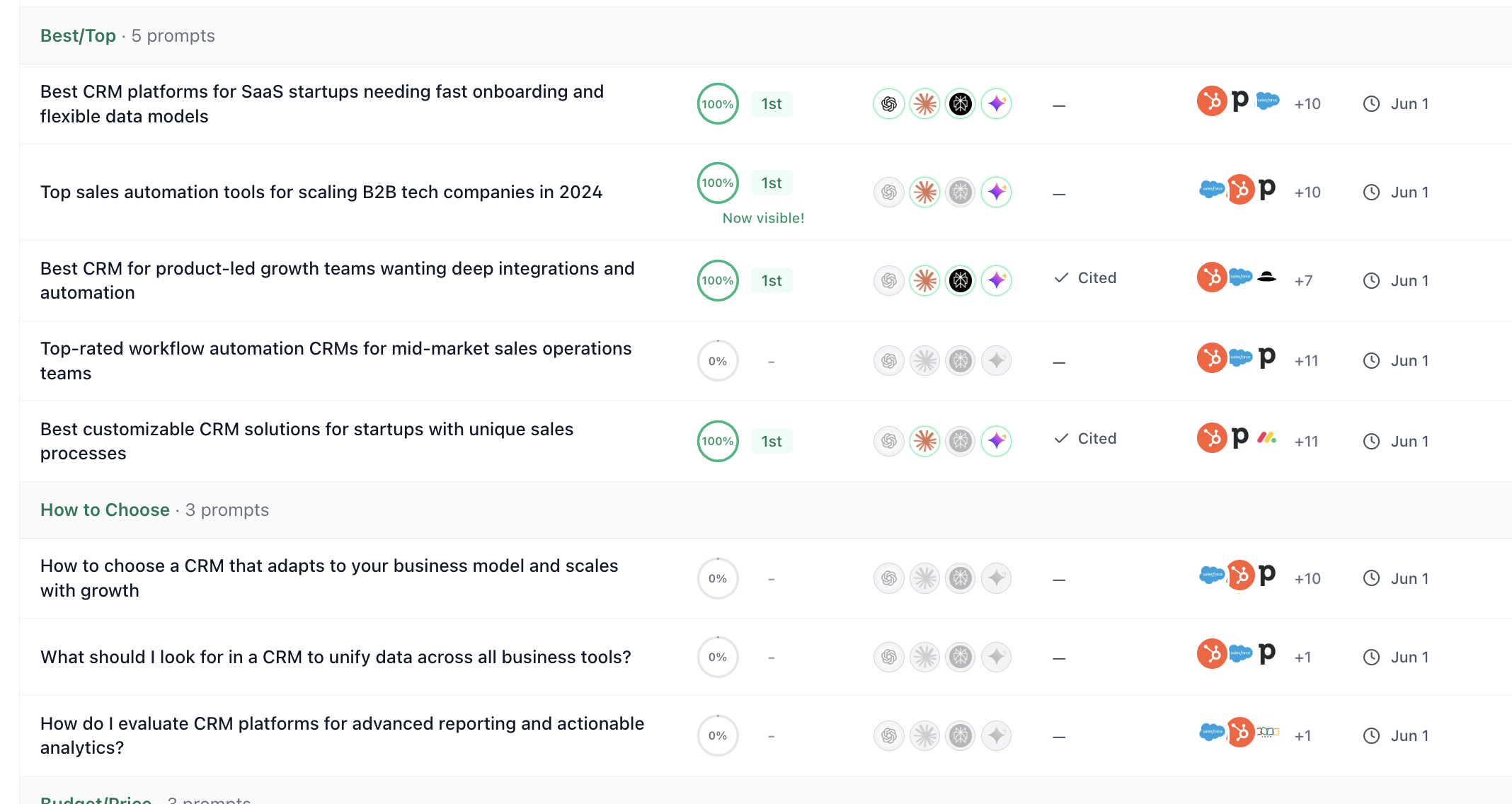
Group the recommendation and evaluation questions buyers ask by commercial category. Each row shows visibility, identifiable rank, model coverage, citation status, competitors, and the latest run.
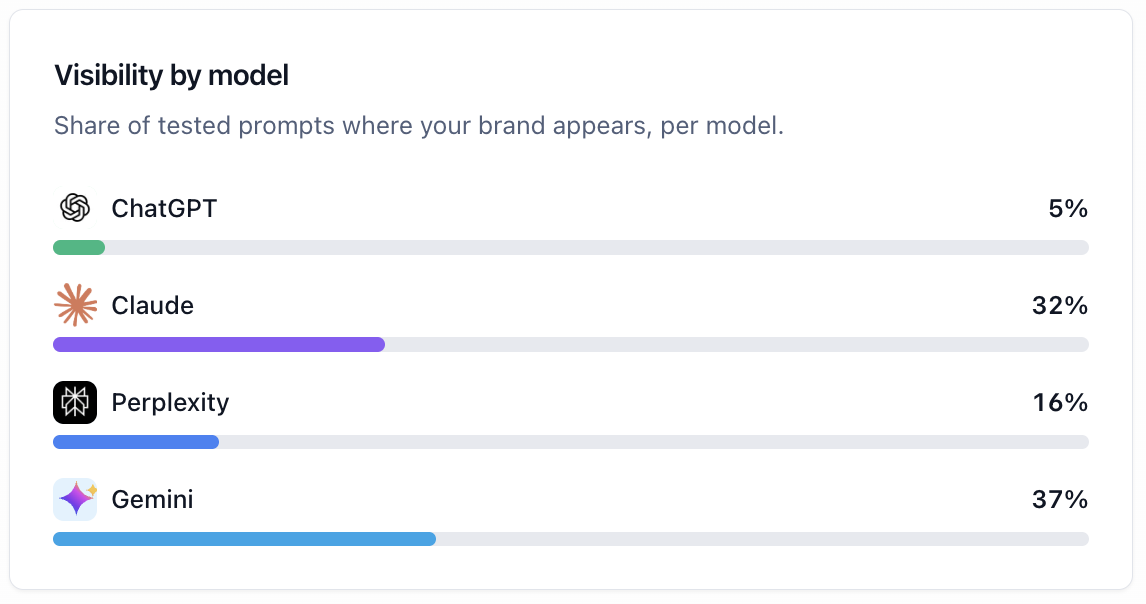
A brand can be present in one answer engine and absent from another. Model-level results reveal where an aggregate score would conceal a meaningful gap.
Answer evidence prevents a dashboard score from becoming a black box.
What you are seeing
Open the answer behind the result
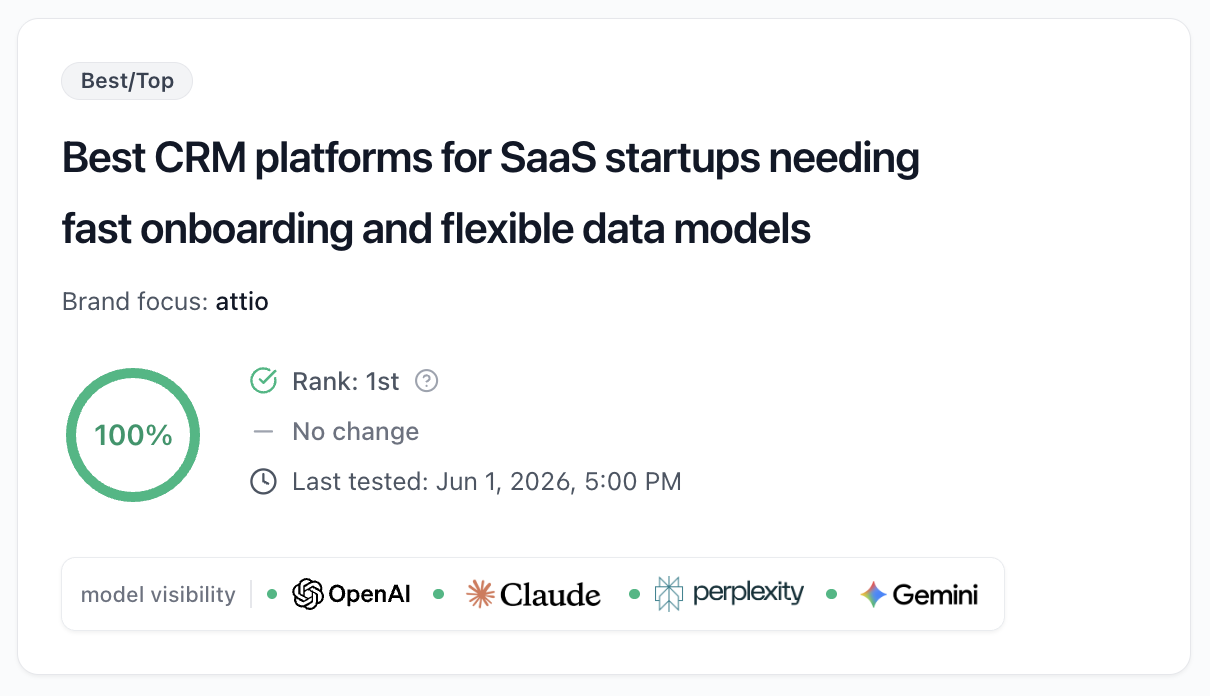
Inspect the answer used for the observation, the detected brand appearance, an identifiable list rank, competitors, and available sources before deciding what the metric means.
Category analysis turns individual prompts into a commercial decision.
What you are seeing
Prioritize the categories that matter
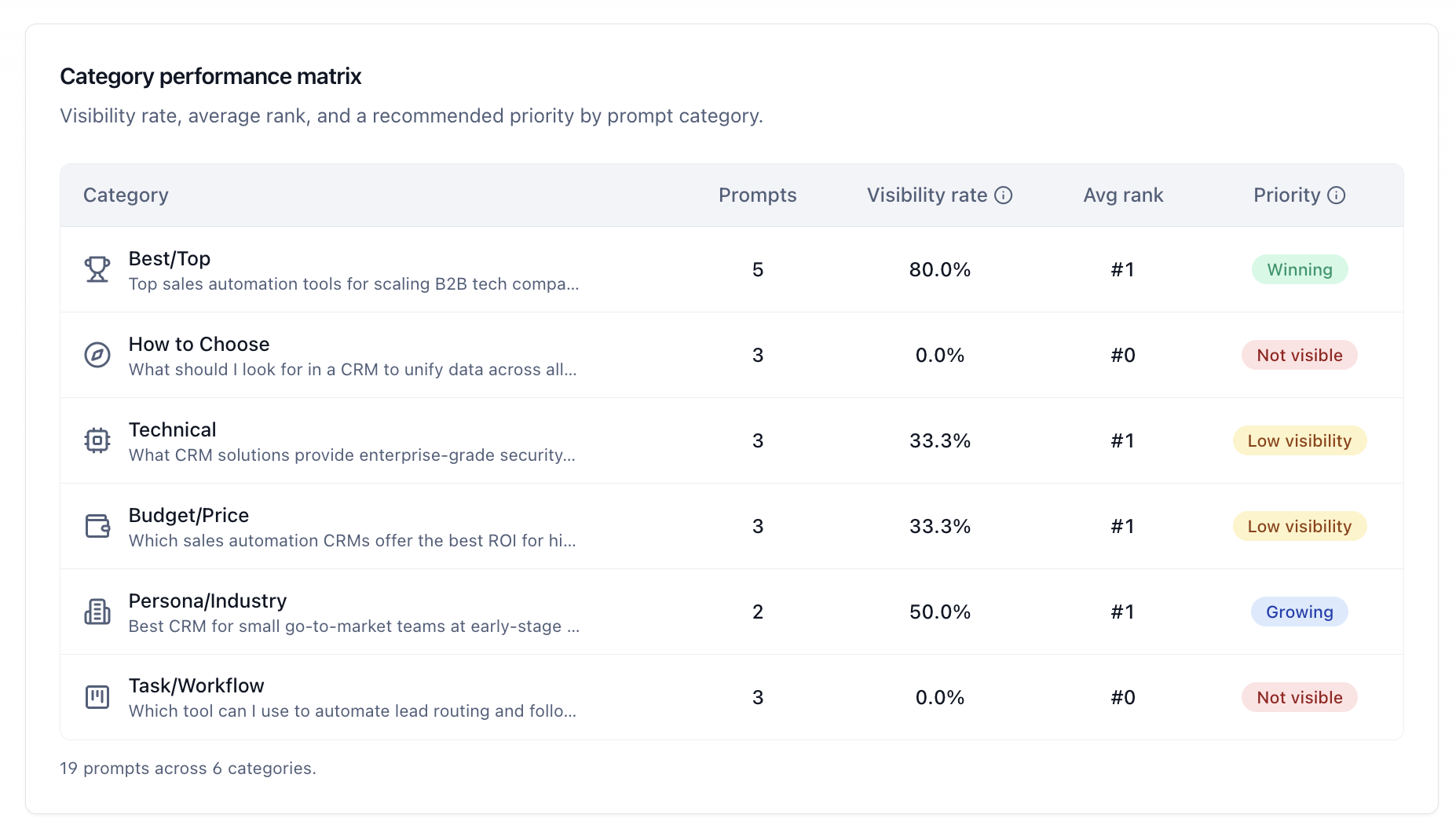
Compare commercial themes to find categories with weak prompt coverage, strong competitors, or enough evidence to justify the next content or authority investment.
Use the same measurement frame across clients, reporting periods, and teams.
1
Step
Define buyer prompts
Start with the recommendation, comparison, and evaluation questions that matter to the market.
2
Step
Run the selected models
Test the configured prompts across the supported answer engines available to the workspace.
3
Step
Review the evidence
Validate appearances, rank when identifiable, competitors, and sources in the captured answers.
4
Step
Compare later runs
Use repeated observations to identify gains, losses, and persistent gaps without treating one response as a trend.
5
Step
Route the next action
Send technical, content, competitor, or citation gaps to the workflow designed to address them.
Measurement methodology
How SEOforGPT measures AI visibility.
These definitions keep the report interpretable and prevent AI-answer observations from being confused with conventional search rankings.
Visibility denominator
Visibility is based on completed monitored prompt results in the selected view where the brand is detected as appearing.
Prompt and model results
Provider observations remain available separately so a positive result in one model does not imply presence in every model.
Rank
Rank is placement inside an identifiable generated list or recommendation order. It is not a Google organic position.
Missing results
Unavailable provider results are not presented as evidence of absence. Completed negative results remain explicit negative observations.
Interpret trends, not isolated certainty
AI answers can vary between runs. SEOforGPT records repeatable observations and movement; it does not label a change statistically significant or guarantee the next answer will be identical.
Use the same evidence in different operating models.
Agencies and SEO consultants
Create a consistent baseline for each client, explain movement, and connect monthly reporting to specific next actions.
In-house search and growth teams
Align SEO, content, product marketing, and communications around the prompts and models where the brand is missing.
SEOforGPT monitors configured prompts across ChatGPT, Claude, Perplexity, and Gemini. Available evidence can differ by provider and plan.
No. Visibility measures presence in monitored answers. Referral analytics measure visits that arrive from an AI surface. Both are useful, but they answer different questions.
AI rank is an identifiable position inside a generated list or recommendation order. It is not a persistent search-results position and may vary across models and runs.
Generated answers can change. Repeated monitoring helps separate a single observation from a recurring pattern and makes gains or losses easier to investigate.
Start with evidence, not a guess.
Run a free audit to see where your brand appears, which prompts are missing, and what the captured answers show.