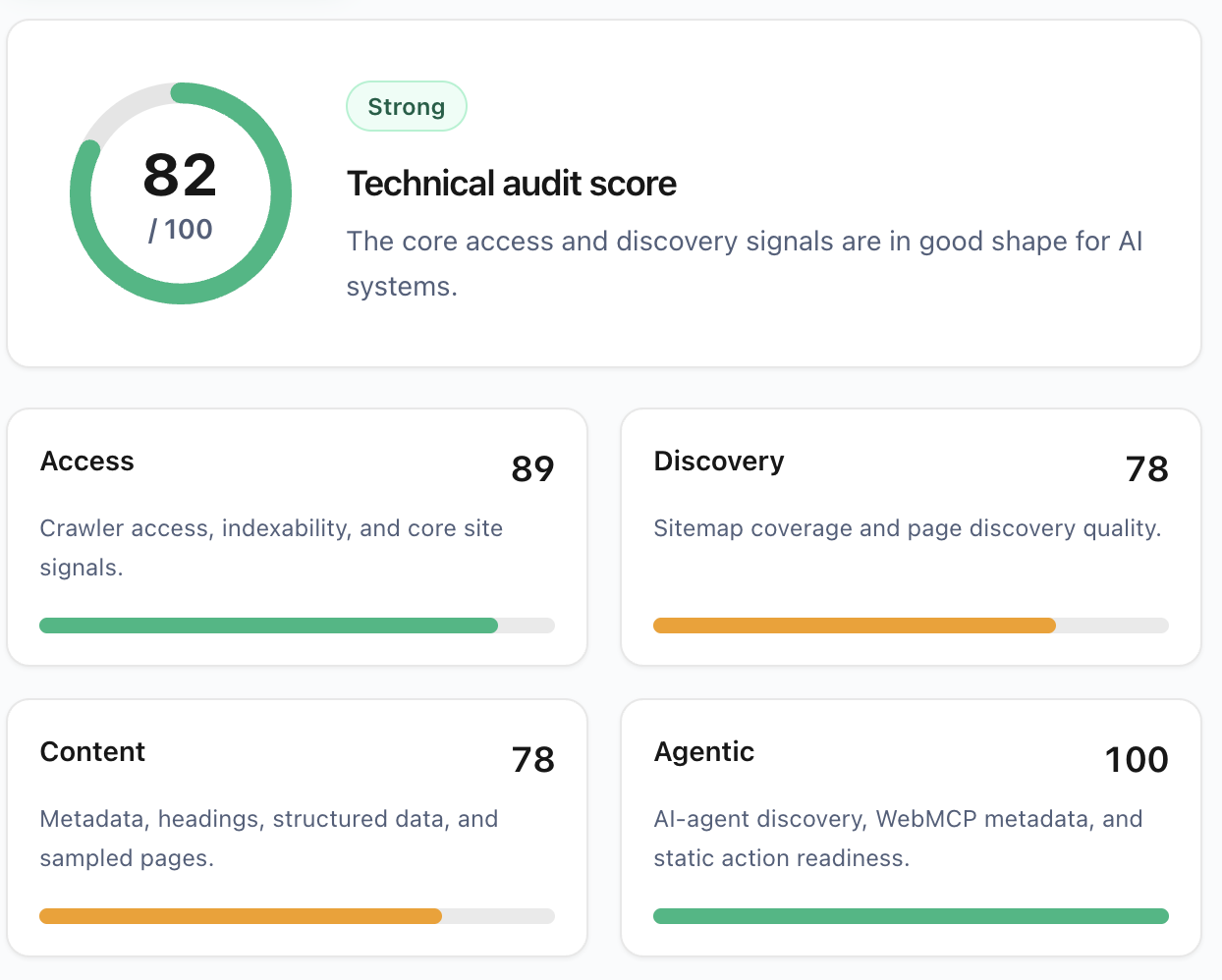
What you are seeing
Separate readiness into four dimensions
Review Access, Discovery, Content, and Agentic readiness independently so a strong score in one area does not conceal a blocker in another.
Open full-size product screenshotCheck the technical access, discovery, content, and agentic signals that make public information easier to retrieve and interpret. Turn the evidence into a prioritized fix list for marketers and developers.
Website Audit
See what helps or prevents AI systems from understanding your site.
AI readiness score
The core access and discovery signals on attio.com are in good shape for AI systems.
AI crawlers can reach your priority pages
Structured navigation is mostly clear
Organization structured data needs review
Robots.txt and sitemap checks completed
An AI website readiness audit checks whether search and AI retrieval systems can access, discover, and interpret important public pages. It evaluates technical and content signals; it does not measure whether a brand is currently recommended or guarantee future inclusion.
Audit evidence
The useful output is not the number alone. It is the group of findings and validation steps behind it.
What you are seeing
Review Access, Discovery, Content, and Agentic readiness independently so a strong score in one area does not conceal a blocker in another.
Open full-size product screenshot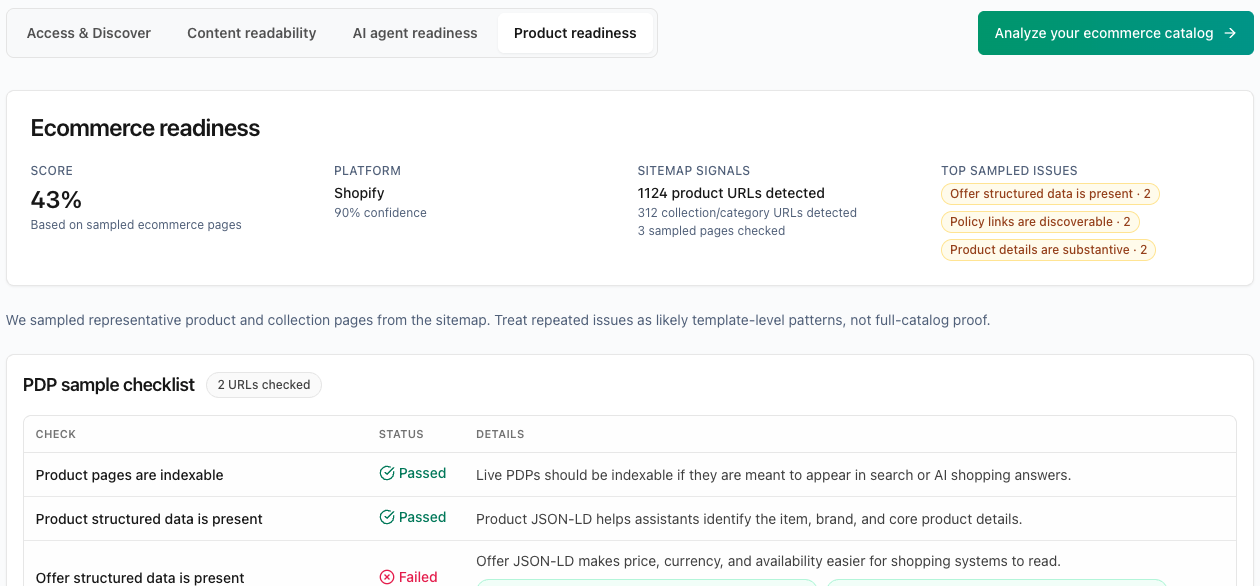
What you are seeing
Open sampled product checks to review platform detection, sitemap coverage, indexability, Product and Offer structured data, and the issues repeated across templates.
Open full-size product screenshotHow it works
Give marketers and developers the same explanation of what failed, why it matters, and how to verify the repair.
Inspect accessible pages and core discovery files without requiring access to a private CMS.
Review robots rules, response behavior, sitemaps, indexability, canonicals, and redirects.
Evaluate visible structure, metadata, structured data, and entity clarity on sampled pages.
Organize evidence by severity, affected area, likely owner, implementation note, and validation method.
Validate that the technical signal changed rather than assuming the implementation worked.
Official guidance
No special schema or experimental file can replace accessible, indexable, useful website content.
Google says ordinary SEO foundations apply to AI features. OpenAI advises publishers who want ChatGPT Search eligibility not to block OAI-SearchBot. Neither source promises inclusion.
Turn an audit into a scoped, evidence-backed recommendation clients can approve and developers can implement.
Separate strategic visibility work from concrete technical repairs, assign ownership, and rerun the audit after changes.
Run a free website-readiness audit and leave with prioritized evidence your marketing and development teams can review.
We use cookies to enhance your experience, analyse site traffic and measure advertising. Read our Cookie Policy